
ISO 45001 Certification Cost: What It Really Takes to Get Certified
Understanding ISO 45001 Certification Cost
If you’re evaluating ISO 45001 certification, the real question is not just cost — it’s what drives that cost and how to control it.
ISO 45001 is not a documentation exercise. It is a structured Occupational Health & Safety (OH&S) management system that requires hazard identification, risk control, worker participation, and continual improvement.
Certification cost reflects how deeply those elements must be integrated into your operations.
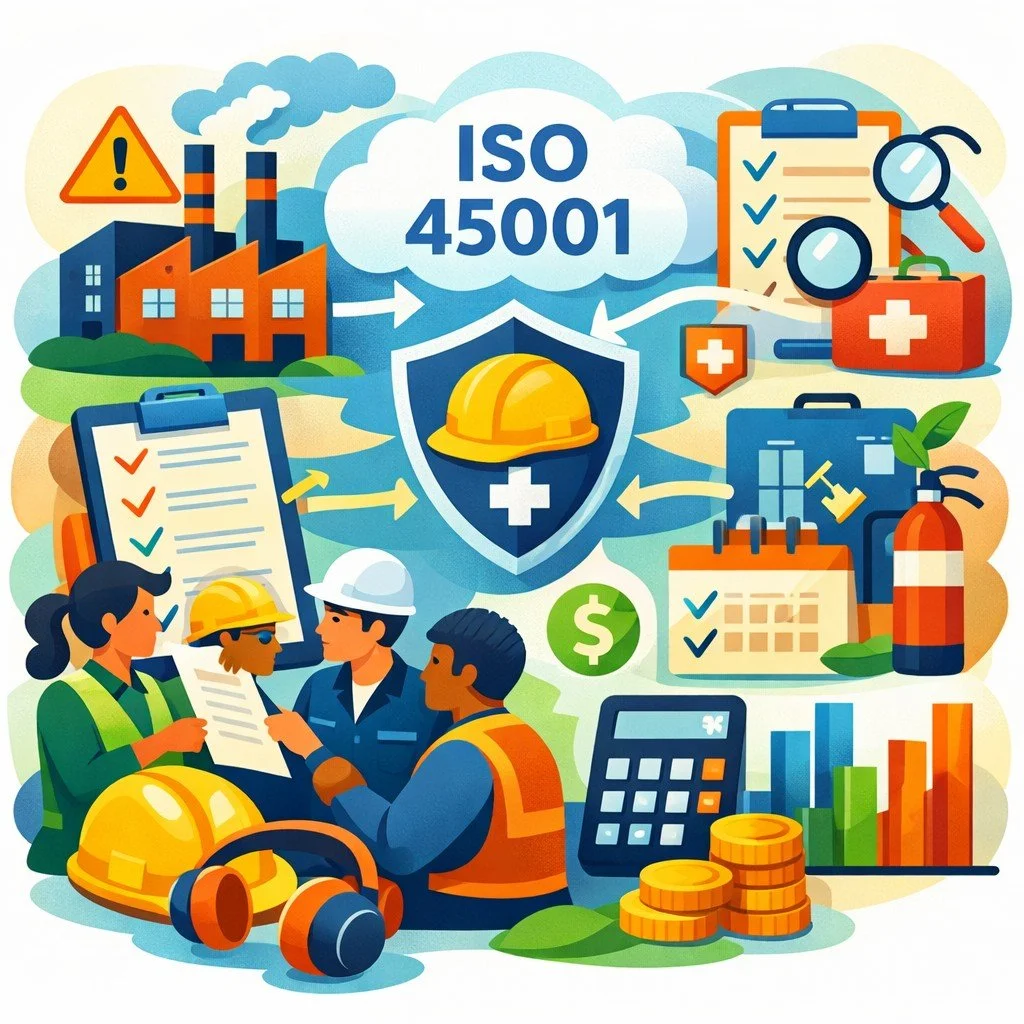
What Drives ISO 45001 Certification Cost
ISO 45001 certification cost is typically made up of four categories:
Consulting and implementation support
Certification body (registrar) audit fees
Internal resource and labor costs
Ongoing surveillance and maintenance
Understanding these categories upfront prevents under-budgeting and avoids disruption during implementation.
Consulting and Implementation Costs
External support is often used to structure implementation, reduce risk, and accelerate certification timelines.
Organizations typically engage an ISO 45001 Consultant when internal safety systems are informal or not aligned to ISO requirements.
Cost depends on:
Number of employees
Number of operational sites
Hazard complexity (office vs. industrial vs. construction)
Existing safety program maturity
Alignment with other ISO systems
Typical Consulting Ranges
Small organization (10–30 employees): $8,000 – $12,000
Mid-size organization (30–150 employees): $12,000 – $25,000
Multi-site or high-risk operations: $25,000+
Implementation effort is driven by operational integration — not document creation.
Organizations taking a broader approach often align this work under ISO Compliance Consulting to ensure consistency across standards.
Certification Body (Registrar) Fees
Certification bodies charge separately for the audit cycle required to achieve and maintain certification.
Typical Audit Costs
Stage 1 audit: $3,000 – $6,000
Stage 2 audit: $6,000 – $15,000
Annual surveillance audits: $4,000 – $10,000
Audit duration and cost are based on:
Employee headcount
Operational risk level
Number of sites
Industry classification
Certification bodies calculate audit time using IAF frameworks, which standardize audit duration expectations.
Internal Resource and Labor Costs
Internal effort is one of the most underestimated components of ISO 45001 certification.
Implementation requires:
Leadership engagement and decision-making
Worker participation and safety committee involvement
Hazard identification workshops
Procedure and control development
Internal audit execution
Management review participation
Typical internal effort includes:
120–300 labor hours over a 4–8 month period
Partial allocation of leadership and operational personnel
Even when external consulting is used, internal ownership is required for the system to function.
Organizations without internal audit capability often leverage ISO Internal Audit Services to support readiness and reduce audit risk.
Ongoing Surveillance and Maintenance Costs
ISO 45001 certification must be maintained through ongoing system operation.
Annual requirements include:
Surveillance audits
Internal audit program execution
Corrective action and improvement processes
Hazard register updates
Training and awareness refreshers
Incident investigation and analysis
Typical Annual Cost Range
$8,000 – $25,000 depending on size and risk profile
Organizations that embed ISO 45001 into daily operations typically experience lower long-term maintenance costs.
What Increases ISO 45001 Certification Cost
Cost increases when operational complexity and system immaturity are high.
Key drivers include:
High-risk operational environments (manufacturing, construction, logistics)
Lack of structured safety programs
Multi-site operations
Weak leadership engagement
Inconsistent documentation and controls
Organizations with existing management systems often reduce cost and effort significantly.
Integration with Other ISO Standards
ISO 45001 is often implemented alongside other standards.
Organizations already aligned to:
can develop a unified system through Integrated ISO Management Consultant approaches.
Integration enables:
Shared document control
Unified internal audit processes
Consolidated management review
Aligned risk-based thinking
Well-executed integration typically reduces implementation cost by 15–30% and simplifies long-term maintenance.
How Timeline Affects Cost
Implementation timeline directly impacts both cost and disruption.
Typical timelines include:
4–6 months — smaller, lower-risk organizations
6–9 months — moderate complexity
9–12+ months — high-risk or multi-site environments
Compressed timelines increase internal strain and consulting intensity.
A structured approach reduces rework and stabilizes execution.
How to Control ISO 45001 Certification Cost
Cost control comes from disciplined implementation, not minimizing scope.
Effective strategies include:
Assigning a dedicated internal project lead
Engaging leadership early in the process
Conducting focused hazard identification workshops
Avoiding unnecessary documentation complexity
Integrating with existing ISO systems where possible
The objective is to build a system that improves safety performance while remaining efficient to operate.
Realistic Budget Planning
A practical ISO 45001 certification budget typically includes:
Consulting: $8,000 – $40,000+
Registrar audits: $9,000 – $20,000 (initial cycle)
Internal labor: variable but significant
Annual maintenance: $8,000 – $25,000
Actual cost depends on organizational scope, operational risk, and system maturity.
A structured ISO Compliance Consulting approach ensures:
Clear initial gap assessment
Logical implementation sequencing
Minimal unnecessary complexity
A system aligned to operational reality
Why This Matters
ISO 45001 certification cost reflects more than compliance.
It represents:
Your organization’s approach to safety risk
Leadership commitment to worker protection
Operational discipline and consistency
Long-term reduction in incidents and disruption
Organizations that implement ISO 45001 effectively see reduced risk, improved performance, and stronger operational control.
If You’re Also Evaluating…
Cost is only one part of the decision.
System design determines whether that investment improves safety performance — or becomes administrative overhead.
Contact us.
info@wintersmithadvisory.com
(801) 477-6329