
Benefits of ISO Certification — Why Structured Management Systems Drive Real Business Value
Why structured management systems drive real business value—not just compliance.
When organizations evaluate ISO certification, the question is usually simple: Is it worth it?
The answer depends on how the system is implemented.
ISO certification is not about documentation. It is about building a structured management system that improves operations, reduces risk, and strengthens long-term performance. The real value is in the system—not the certificate.
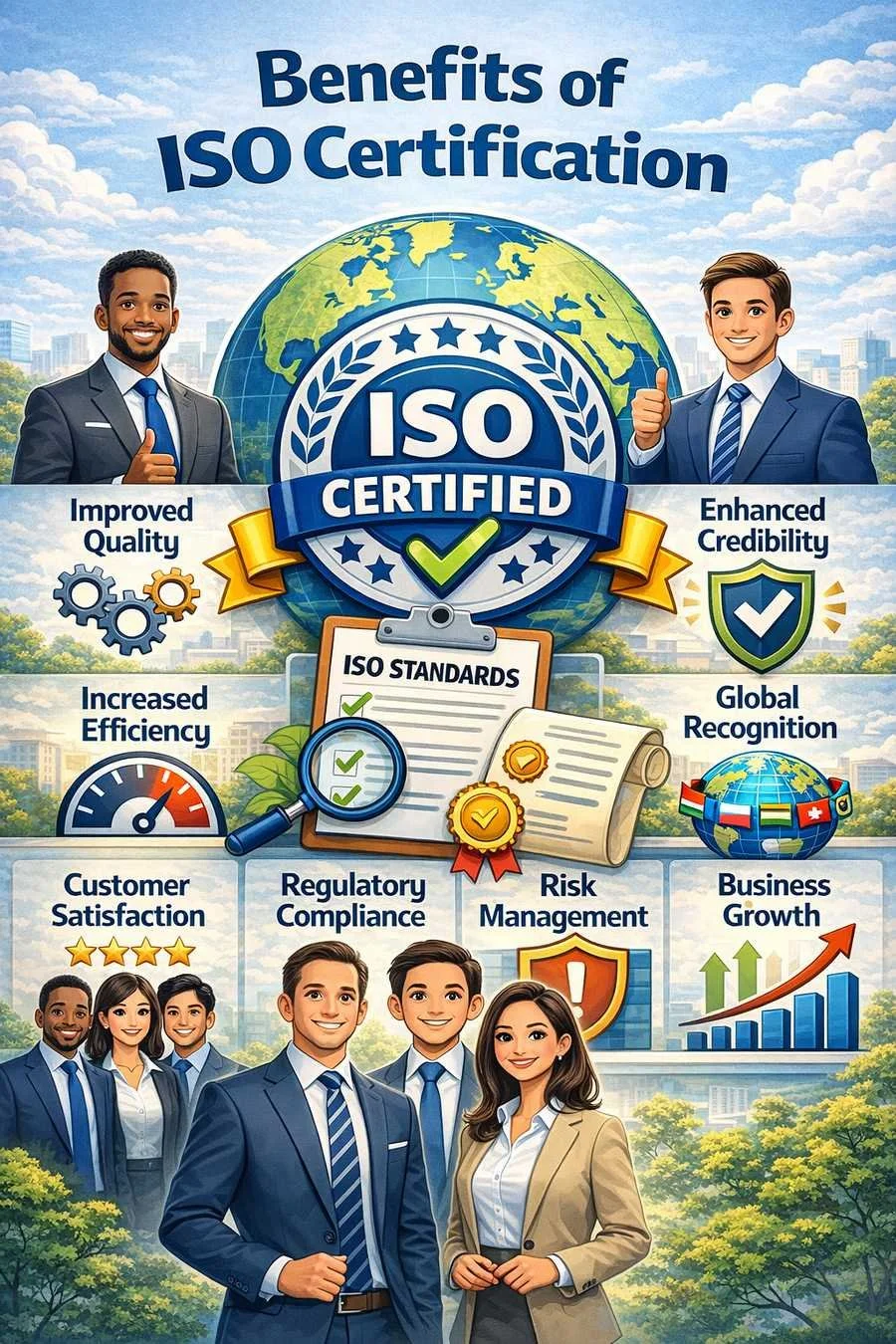
What ISO Certification Actually Delivers
ISO standards such as ISO 9001, ISO 14001, and ISO 27001 are designed to create disciplined, measurable, and repeatable business processes.
Organizations that approach certification through structured ISO Certification Consulting Services typically realize far greater value than those treating it as a documentation exercise.
Operational Benefits
A well-implemented ISO system improves how work is performed across the organization.
Key operational benefits include:
Clearly defined roles and responsibilities
Standardized and repeatable workflows
Reduced rework and operational errors
Structured corrective action processes
Measurable performance tracking
Improved supplier management and oversight
Under a disciplined ISO 9001 Quality Management System, variability is reduced because processes are defined, controlled, and continuously improved.
Risk Reduction and Governance
Modern ISO standards embed risk-based thinking directly into operations.
This leads to:
Proactive identification of operational risks
Structured change management
Improved supply chain visibility
Stronger contract and requirement review
Documented, defensible decision-making
Organizations implementing structured ISO Risk Management Consulting approaches integrate risk into daily operations rather than treating it as a separate exercise.
Increased Customer Confidence
ISO certification signals control, consistency, and professionalism.
Customers perceive certified organizations as:
More reliable
Better controlled
Lower risk
Easier to work with
In many industries, certification is required for supplier approval. Organizations often pursue ISO 9001 Certification Consulting specifically to meet customer and contract requirements.
Competitive Advantage
ISO certification can unlock access to opportunities that are otherwise unavailable.
This includes:
Entry into regulated or enterprise markets
Eligibility for larger contracts
Placement on approved vendor lists
Faster onboarding with major customers
For example, aerospace organizations often evaluate ISO 9001 vs AS9100 when positioning for higher-tier contracts.
Strategic certification decisions should align with market expectations—not just internal preferences.
Financial Benefits
While ISO implementation requires investment, the financial return is often measurable.
Organizations commonly experience:
Reduced scrap and rework
Fewer customer complaints
Lower defect and warranty costs
Improved operational efficiency
Stronger supplier performance
Reduced disruption during audits
Working with an experienced ISO Consultant helps avoid over-documentation and accelerates time to value.
Leadership Alignment and Strategic Control
ISO standards require active involvement from top management.
This drives:
Clear organizational objectives
Structured management review processes
Improved performance visibility
Better resource allocation
Stronger accountability across functions
In mature organizations, ISO becomes part of governance—not a separate compliance activity.
Cultural and Continuous Improvement Benefits
ISO systems embed continuous improvement into daily operations.
This includes:
Internal audits
Corrective action processes
Objective performance monitoring
Ongoing system evaluation
Organizations often initiate this shift through ISO Internal Audit Services, transforming audits into drivers of improvement rather than compliance checks.
Over time, this reduces reactive problem-solving and replaces it with structured performance management.
Internal vs External Benefits
The benefits of ISO certification fall into two categories.
External Benefits
Customer trust and credibility
Market access and qualification
Brand reputation
Internal Benefits
Process clarity and consistency
Risk management integration
Performance tracking and visibility
Waste reduction and efficiency gains
Organizations that focus only on certification as an external signal miss the deeper operational value.
Which ISO Standards Deliver the Most Value?
The answer depends on your industry and strategic objectives.
Common examples include:
ISO 9001 — Quality and customer satisfaction
ISO 14001 — Environmental management
ISO 27001 — Information security governance
AS9100 — Aerospace sector requirements
ISO 13485 — Medical device quality systems
Many organizations begin with ISO Management System Consulting to determine which framework aligns best with their business model and growth strategy.
Consultant-Led Implementation vs DIY
Certification bodies audit systems—they do not design them.
A structured consulting approach helps:
Avoid unnecessary or excessive documentation
Align ISO requirements with real operations
Reduce audit findings
Accelerate certification timelines
Maximize operational impact
Organizations working with experienced ISO 9001 Certification Consultants typically achieve stronger, more sustainable systems.
Why Wintersmith Advisory
ISO systems only deliver value when they are designed to function—not just to pass an audit.
Wintersmith Advisory focuses on:
Practical, operations-aligned system design
Risk-based and evidence-driven implementation
Clear documentation without unnecessary complexity
Long-term system sustainability
Integration across multiple standards and regulatory frameworks
We build systems that improve how your business actually runs.
If You’re Also Evaluating…
Organizations exploring ISO certification often also consider:
Ready to Capture the Real Value of ISO Certification?
ISO certification is not the goal.
A controlled, efficient, and scalable management system is.
If you want certification to actually improve your operations—not just check a box—we can help you build it correctly from the start.
Contact us.
info@wintersmithadvisory.com
(801) 477-6329